
The Chubbuck Technique
Twelve
Steps
The foundation of everything we teach at TSAW.
The Method
From performer
to storyteller.
The Chubbuck Technique — developed by Ivana Chubbuck and detailed in her landmark book The Power of the Actor — is the acting method at the heart of everything TSAW teaches. These twelve foundational tools give actors a structured, repeatable approach to breaking down any scene and accessing authentic emotional truth.
This is not about performance. It is about using the full architecture of your character's psychology to drive the scene forward with purpose, specificity, and real human behavior.
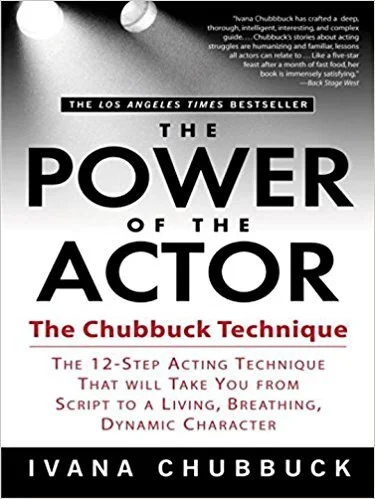
Get the Book
"The technique gives you the tools to stop acting and start living truthfully within imaginary circumstances."
— The Chubbuck Method, as taught at TSAW
The Framework
The twelve steps.
-
Overall Objective
Identifying what your character wants from life more than anything — their primal need, their deepest driving force. This overarching desire runs beneath every scene and shapes every choice the character makes throughout the entire script.
-
Scene Objective
Determining what the character wants within a specific scene — the immediate, actionable goal that serves and supports the overall objective. The scene objective must always be something the actor can actively pursue from their scene partner.
-
Obstacle
Recognizing the physical, emotional, and psychological challenges standing between the character and their objective. Without a real obstacle, there is no conflict. Without conflict, there is no drama. The obstacle creates the engine of the scene.
-
Substitution
Assigning a real, specific person from your own life to the character of another actor in the scene. This substitution anchors your emotional responses in authentic personal experience, transforming scripted relationships into lived ones.
-
Inner Objects
Creating specific, vivid mental images whenever the character references or hears about people, places, things, or events that are not physically present. Inner objects give language and memory a sensory dimension that makes them tangible and emotionally real.
-
Beats & Actions
Understanding that a beat represents a shift in thought — a change in strategy or intention. Each beat contains an action: a specific mini-objective the character pursues to advance their scene goal. Mapping beats and actions creates the granular architecture of a fully inhabited scene.
-
Moment Before
Establishing the imagined event or experience that exists immediately before the scene begins. The moment before places the actor in the correct emotional and physical state before the first word is spoken, ensuring that entrances feel genuinely lived-in rather than freshly arrived at.
-
Place & Fourth Wall
Using imagination to endow the character's physical environment with specific, authentic attributes — sights, sounds, smells, textures. The fourth wall is equally specific: what the character sees beyond the proscenium becomes a real, inhabited world rather than an empty void.
-
Doings
Handling props and performing physical tasks with deliberate, specific intentionality. Doings prevent actors from standing and talking — they produce naturalistic, grounded behavior that keeps the body engaged and the performance rooted in the physicality of real life.
-
Inner Monologue
Developing the unspoken internal dialogue that runs beneath every line of text — the continuous stream of thought that reflects the character's true emotional reality. Inner monologue fills the silences, the reactions, and the pauses with genuine psychological life.
-
Previous Circumstances
Understanding the character's full history — the background, formative experiences, relationships, wounds, and behavioral patterns that have shaped who they are by the time the story begins. Previous circumstances explain why a character behaves as they do, creating coherence and depth throughout the performance.
-
Let It Go
Trusting the preparation. Having done the rigorous analytical and emotional work of steps one through eleven, the actor releases control and allows the performance to emerge organically. Let It Go is the permission to be present, to respond, and to act — rather than to execute a plan.
Ready to Apply the Technique?
Learn these steps
live with a coach.
The twelve steps are best understood through practice. Join an online class and work through scenes with expert guidance every week.